Puppy first night: crying in the crate
Quick answer. Put the crate right beside the bed, expect at least one toilet trip, and keep night trips boring. Do not leave a frantic puppy to cry it out. Loneliness usually settles once they can hear you; true panic means you went too fast, so open up and rebuild in the daytime.
Why the first night is hard
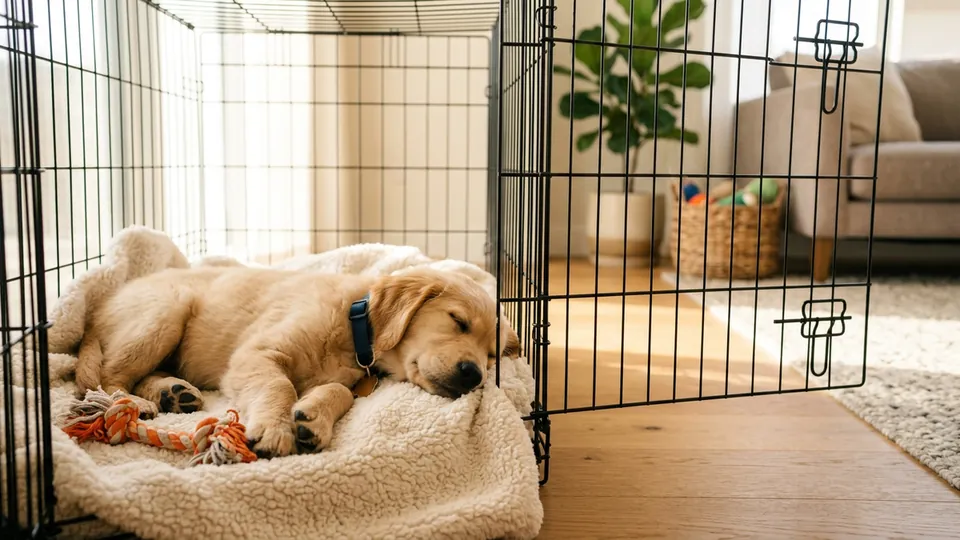
A puppy who left littermates that morning and is now alone in a dark kitchen feels abandoned. Nights are where many people come unstuck. The force-free plan is the same one in crate training a puppy: keep the crate close, treat crying as information, and never use the crate as punishment.
Before the first night, spend the day making the crate wonderful with the door open: treats just inside, meals at the back, a chew left as a surprise. If you skip that and shut a puppy straight in at bedtime, you are starting from fear.
What is a crate for, and what is it not for?
Dogs are den animals at heart, and a properly introduced crate taps into that instinct: a small, enclosed, cosy space where your puppy can switch off and feel safe. Used well, a crate earns its keep in four ways.
- A safe den. Somewhere your puppy can retreat to rest, undisturbed by children or visitors.
- Toilet training. Most puppies won't soil their sleeping space, so a correctly sized crate helps build bladder control and a predictable routine.
- Preventing trouble. A puppy who can't yet be trusted loose is safe — not chewing cables or swallowing socks — while you can't supervise.
- Safe travel and recovery. A crate-comfortable dog travels more calmly and copes far better with crate rest after surgery or injury.
One thing a crate is never for: punishment. The moment the crate becomes the place a puppy gets sent in anger, it stops being a safe den and becomes something to avoid. Keep every association positive, and never use it as a way to silence a puppy by shutting them in and walking off.
Choosing the Right Crate and Size
Size matters more than you'd think. Your puppy should be able to stand up without ducking, turn around comfortably, and lie down flat on their side — but no bigger than that for now. If the crate is cavernous, your puppy can toilet in one corner and sleep clean in the other, which undoes the toilet-training benefit entirely.
Because puppies grow fast, buy a crate sized for the adult dog and use a divider panel to section off just enough room. Move the divider back as your puppy grows. A sturdy wire crate with a divider is the usual choice; soft fabric crates are best saved for later, once chewing is no longer a temptation.
Tip: Placement matters. Put the crate somewhere sociable but calm — a corner of the living room or kitchen where your puppy can see family life but isn't in the middle of the noise. Avoid draughts, direct sun, and radiators.
Step 1: Make It Wonderful
Before you ever think about closing a door, the crate needs to become the best place in the house. Spend the first few days simply building good feelings, with the door fixed open so it can't swing shut and startle anyone.
- Put comfy bedding inside and leave the door wide open.
- Casually toss a treat just inside, then a little further in, and let your puppy wander in to find it. Never push or lure them in against their will.
- Start feeding every meal inside the crate, bowl placed at the back.
- Leave a long-lasting chew or a stuffed food toy in there as a pleasant surprise.
- Praise calmly any time your puppy chooses to go in or settle there on their own.
The goal of this stage is a puppy who trots into the crate happily because good things keep appearing there. Let it be entirely their choice.
Step 2: Add the Door, Briefly
Once your puppy is eating and relaxing inside, you can start closing the door — for seconds at first, while something good is happening.
- While your puppy is busy eating or chewing inside, gently close the door for just a few seconds.
- Open it again before they finish and before they fuss, so the door opening isn't a reward for whining.
- Build the closed time in tiny increments — a few seconds, then ten, then thirty — always staying within what your puppy is comfortable with.
If your puppy stiffens, whines, or stares at the door, you've gone a step too fast. Drop back to a shorter, easier version and rebuild. Slow and steady wins here every time.
Step 3: Build Duration and Distance
Now you'll stretch how long your puppy settles and add a little distance, so being in the crate without you feels normal.
- Close the door, then simply sit quietly beside the crate for a minute or two.
- Once that's easy, potter about the room — tidy up, make a cup of tea — staying in sight.
- Step out of the room for a few seconds, then return calmly. Build up to a few minutes.
- Vary the times so it's unpredictable: a thirty-second absence, then two minutes, then ten seconds. A pattern your puppy can predict creates anticipation; randomness keeps them relaxed.
Keep arrivals and departures low-key. No big emotional goodbyes, no excited reunions — calm in, calm out. This is the same gentle, gradual approach that underpins good help for a dog with separation anxiety.
Crate Training, Guided Step by Step
PupPlan's Crate Training and Home Alone courses walk you through every stage above with step-by-step lessons, homework and quizzes — and daily streaks plus smart care reminders keep your short, frequent sessions on track. They're two of 21 structured courses inside the app.


Step 4: Night-Times
Nights are where many people come unstuck, because a puppy alone in a dark kitchen feels abandoned. Make the first nights easy by keeping your puppy close.
- Put the crate right beside your bed at first, so your puppy can hear, smell, and see you. This single change settles most night-time crying.
- Expect young puppies to need at least one toilet trip in the night — their bladders simply aren't big enough yet to last until morning.
- When they stir for the toilet, take them out calmly, let them go, and bring them straight back. Keep night trips boring: no play, no chatter, minimal light.
- Over the following weeks, you can gradually move the crate further from your bed towards its permanent spot, a little at a time.
Handling Whining
Whining is information, and your job is to read it correctly. There's a real difference between "I need the toilet" and "I want out", and between a mild grumble and genuine distress.
- A genuine need — a young puppy who's been settled a while and suddenly stirs almost certainly needs the toilet. Never ignore that; take them out.
- A demand — a puppy who's just been out, fed, and settled, then grumbles to be released, is testing whether fussing works. Don't open the door during the tantrum, or you teach that whining is the way out. Wait for a pause, however brief, and let them out on the quiet.
- True panic — frantic barking, drooling, scrabbling to escape, or soiling is not naughtiness; it's distress, and it means you've moved too fast. Never flood a panicking puppy by shutting them in and leaving. Open up, scale right back, and rebuild in tiny, positive steps during the day.
The line to hold is simple: don't reward demand-barking by releasing mid-tantrum, but never ignore real distress. When in doubt, assume a need and help.
How long is too long in a crate?
A handy rule of thumb is roughly one hour per month of age in the daytime — a four-month-old puppy can manage around four hours, and even fully grown dogs shouldn't be crated longer than about four hours at a stretch during the day. Nights are different, as sleep naturally stretches the time.
A crate is a resting place and a management tool, not a place to park a dog all day while you're at work. A puppy crated too long, too often, will come to resent it — and miss out on the exercise, toilet breaks, and company they need. If your days are long, arrange a midday visit, a sitter, or a safe puppy-proofed room instead.
Common Mistakes
- Using the crate as punishment. Send your puppy there in anger even once and you poison the den. It must only ever predict good things.
- Going too fast. Skipping the open-door stage and shutting a puppy straight in creates the panic you're trying to avoid.
- Flooding a distressed puppy. Leaving a frantic puppy shut in to "cry it out" damages trust and can make crate fear far worse.
- A crate that's too big. Without a divider, your puppy will toilet in one corner and sleep in the other, undoing the toilet-training benefit.
- Releasing during a tantrum. Opening the door mid-whine teaches that whining works. Wait for a quiet moment.
- Crating too long. Hours on end isn't training; it's confinement. Respect the age guideline.
Frequently Asked Questions
Should I let a puppy cry it out on the first night?
No. Leaving a frantic puppy shut in to cry it out damages trust and can make crate fear worse. Put the crate beside the bed, take genuine toilet needs seriously, and if you see true panic, open up and rebuild in the daytime.
Where should the crate go on the first night?
Right beside your bed, so the puppy can hear, smell and see you. That single change settles most night-time crying. Move it towards its permanent spot over the following weeks, a little at a time.
My puppy cries all night in the crate — what do I do?
Rule out a real need first: a young puppy almost certainly needs a toilet trip, so take them out calmly and straight back with no play. Crying that's loneliness rather than need usually settles fastest with the crate right beside your bed. If your puppy is in true panic, you've moved too fast — scale right back to short, positive daytime sessions.
How long can a young puppy last overnight without a toilet trip?
Expect at least one toilet trip in the night. A handy daytime rule is roughly one hour per month of age; nights stretch longer because the puppy is asleep, but a very young puppy still cannot hold until morning.
The daytime introduction is crate training a puppy. The first weeks sit together in a puppy's first weeks and the schedule by age.
Sources
This guide follows published guidance from the organisations named below. Your own vet knows this dog; use these pages as background, not as a diagnosis or a timetable.